From the Ground Up: Finding Opportunity in the Central Valley
What began as curiosity about an unfamiliar industry became a career built on leadership, opportunity, and the unseen logistics that keep food moving.
Chris Harrington did not plan on building a career in cold storage.
When he first walked into a United States Cold Storage facility in Tulare County in 2003, he didn’t think of it as the start of anything significant. He was simply being introduced to an industry he knew little about.
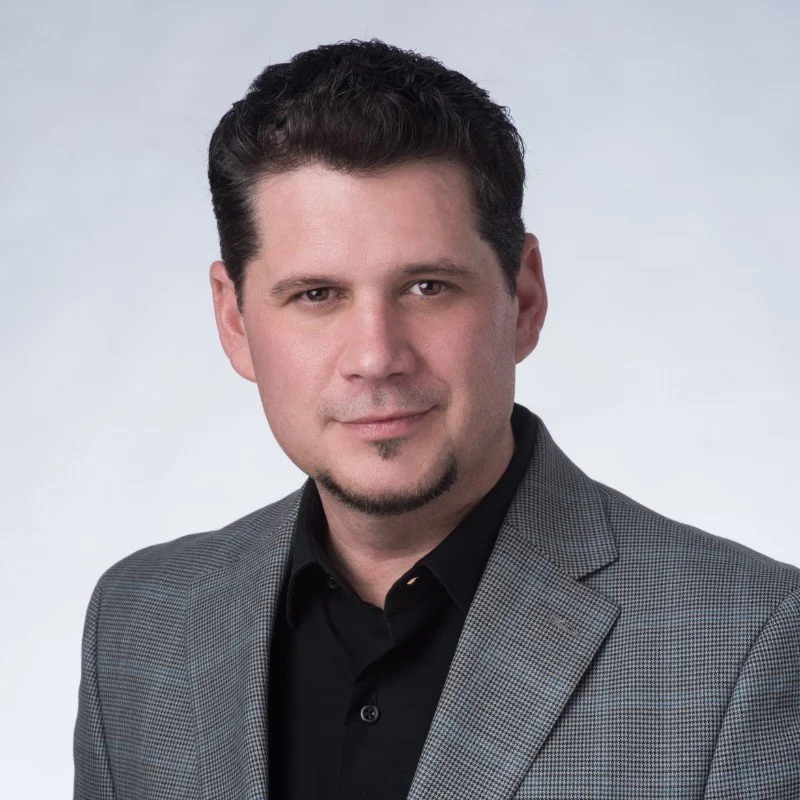
“The thing that struck me almost immediately was the scale,” he said.
Forklifts moved constantly, trucks cycled through loading docks, and product flowed through the building in volumes he had never considered.
Growing up in California’s Central Valley, agriculture had always existed in the background, orchards, packing houses, and processing plants stretching along Highway 99. But cold storage gave him a different perspective on the system connecting farms to households.
“You don’t really think about all the logistics in between the farm and actually getting it into stores,” he said. “Into people’s homes and onto their dining tables.”
At the time, Harrington was still working in retail. He had started part-time at a local bookstore chain while still in high school and gradually worked his way into operations and management as the company expanded across the Valley. The work felt steady until the industry began shifting. Big-box retailers squeezed margins, online shopping accelerated, and he started wondering how stable the future really was.
“I kind of saw the writing on the wall,” he said.
An acquaintance encouraged him to take a look at cold storage. People kept telling him the same thing: just come see it. So he did. Nearly 23 years later, Harrington is the Regional Vice President for United States Cold Storage, overseeing operations across California. It is a trajectory he still sounds slightly surprised by.
“It’s extremely hard to believe,” he said.
What he remembers most from those early months is realizing how interconnected the work was. Warehousing was only one component of a much larger system. Inventory, transportation, customer demand, production cycles, and timing all depended on one another in ways he had not anticipated.
“I was just learning how everything played together,” he said. “How everything was tied together.”
Over time, that understanding changed how he viewed the region where he grew up. Agriculture no longer felt like background scenery in the Central Valley. It looked more like an enormous network moving food from farms to households, with cold storage at the center of a process most people rarely see. At one point, Harrington became curious about the volume moving through the company’s California facilities each year. He compared total shipments against the average amount of food consumed annually by American families.
“We could feed four states,” he said. “California, probably not,” he added with a laugh. “There’s a lot of mouths to feed here.”
He can trace some of that perspective even further back. As a child, he sometimes rode along with his father, a sales engineer for a food machinery company, as they drove across the Valley to visit packing houses and food operations. At the time, he was unimpressed.
“I thought it was boring,” he said, laughing. “You’re sitting in a car for hours.”
Years later, those drives began to feel different in memory, less like isolated visits and more like glimpses into a system he would eventually spend his career helping manage. In 2009, Harrington was asked to help open a new facility in Turlock. At the time, the site was still farmland.
“An alfalfa field turned into a cold storage facility,” he said.
The assignment meant helping build operations from the ground up. Harrington joined as operations manager and stayed through years of expansion, helping oversee growth as the site eventually became one of the company’s larger California facilities.
“They [U.S. Cold Storage] were crazy enough to ask me, and I guess I was crazy enough to say yes,” he said.
What stood out to him most was not the promotion itself, but the trust behind it.
“The opportunity they [U.S. Cold Storage] were willing to invest in me, that stood out,” he said.
Early in his career, Harrington expected more formal instruction: manuals, structured onboarding, and clearly defined steps. Instead, much of the learning came through doing the work itself.
Over time, United States Cold Storage built more formal training systems, including leadership development, operations education, and cross-site learning. Each year, the company sends more than 100 employees to technical training programs focused on logistics, refrigeration, and other specialized areas, with costs covered by the company.
Internally, United States Cold Storage has also developed its own education system, known as USCSU, which has taken shape over the past decade. Employees from more than 40 locations across the country travel to the company's corporate headquarters in Camden, New Jersey, to participate in training tracks tailored to different parts of the business. The curriculum is developed in-house and taught by experienced United States Cold Storage employees, creating a system for sharing knowledge and developing future leaders across the organization. The company is now working to expand those efforts through regional training programs closer to its facilities.
The company now employs more than 1,100 people across California, including warehouse operators, customer service teams, engineers, analysts, managers, and technical specialists working around increasingly automated systems. But even as the business became larger and more complex, Harrington said the core of the work remained unchanged.
“At the end of the day, it’s people,” he said. “It’s always been people.”
He speaks directly about advancement inside the company and the importance of creating opportunities for people to grow rather than leave.
“You never want people to feel like they have to leave the organization to have opportunity,” he said.
Often, he said, development starts by giving someone responsibility before they feel entirely ready for it. Sometimes, it is easier to train someone without warehouse experience than someone who brings habits learned elsewhere.
The company also partners with schools and workforce programs across the Central Valley, including in Turlock, Merced, and Kern counties, exposing students to real operational challenges. One partnership with the University of California, Merced, places engineering students in direct contact with facility-level problems, and some later join the company.
One employee, Harrington said, started through a student project, moved into an analyst role, worked across operations and corporate positions, and eventually returned years later in a regional leadership role. For Harrington, stories like that matter because they are tangible examples of growth inside the company.
“They actually happen,” he said.
And the numbers speak for themselves. Since Harrington joined, United States Cold Storage has expanded its California operations by roughly 400%, while opening two new facilities in the past year and hiring dozens of new employees. Harrington sees those figures not simply as statistics, but as a reflection of what the company offers: stability, room to grow, and work that connects to something larger than a shift schedule.
He often hears warehouses described from the outside as little more than giant buildings with trucks moving in and out.
“A big giant box with trucks going in and out,” he said.
Inside, he sees something more complex: people building long-term careers, learning systems they never expected to understand, moving from warehouse floors into leadership, and supporting families through work tied directly to the movement of food.
For Harrington, the work eventually comes back to something simple: food. In an industry built around pallets, dock schedules, and inventory systems, it can be easy to lose sight of what is actually moving through the building.
“At times, you can get stuck in the mindset of, okay, we’re unloading a truck, moving a pallet, handling cases,” he said. “But that’s not just wood and cardboard. That’s food.”
He paused before adding the thought that still stays with him after more than two decades in the industry.
“What you’re handling could literally be on somebody’s table tomorrow. After all these years, that still sticks with you.”