Why People Stay in Central Valley Manufacturing
Kayla Robinson’s work at CalPortland highlights the often-overlooked role environmental professionals play in Fresno’s manufacturing and construction materials sector.
On a Central Valley morning, Kayla Robinson might begin her day walking the grounds of a concrete plant, checking equipment and site conditions, talking with managers about permits or inspections. Later, she may be back in her Fresno office reviewing regulatory updates or preparing compliance reports.
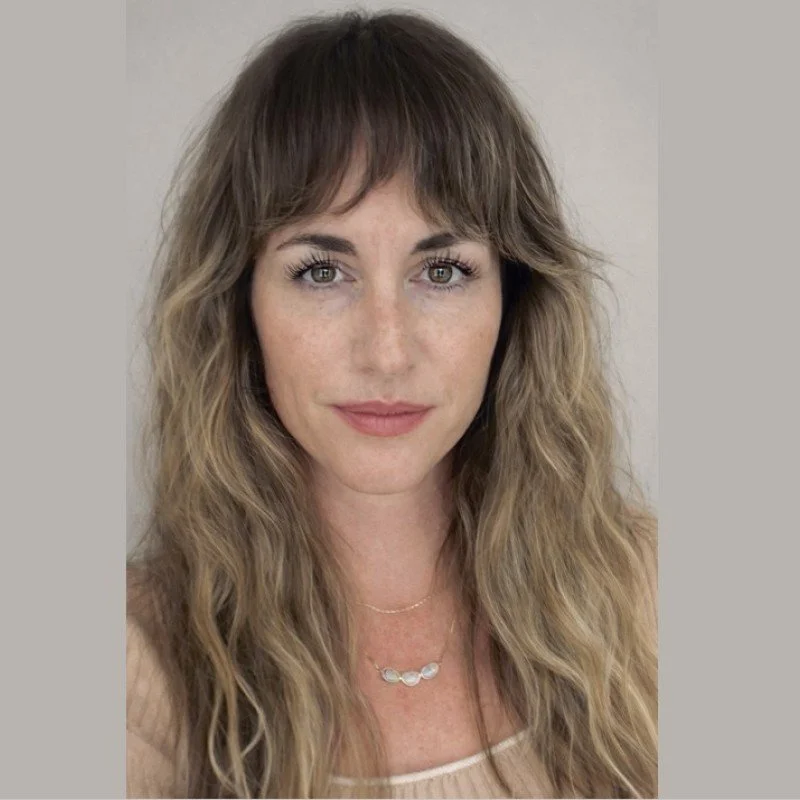
Her work shifts between the practical and the technical, between being on the ground and working through the details of environmental law. It is a balance that defines both her job and her career.
She has been with CalPortland for just under a year, but her experience in environmental compliance within the industrial materials sector spans more than five years. Before that, her career took a very different path. She spent nearly a decade in medical device sales, a field she describes as high-pressure and often glamorized.
“This is kind of the opposite of that,” she said. “What surprised me most is how many people in this industry have been with the same company for thirty or forty years.”
That longevity stands out to her. Across CalPortland, Vulcan Materials, and Granite Construction — the three major companies where she has built her environmental career — Robinson has seen employees grow from interns into managers and from entry-level field workers into leaders responsible for entire operations.
“You don’t see that unless people are being taken care of,” she said. “It says something about the stability these jobs provide.”
Robinson did not set out to work in the materials industry. Raised in Bakersfield, she studied biological sciences with an emphasis in neurobiology at the University of California, Davis, and initially planned for a future in medicine. Her early career followed that interest through medical device sales in cardiac and spinal surgery. Environmental work, however, had always been in the background. Eventually, she found a training program through Tulare County’s Environmental Health Department that led to certification as a Registered Environmental Health Specialist — a decision that shifted her professional direction.
“I thought the credential would be the most important part,” she said. “It helped, but what mattered more was learning how things actually work in the field.”
At CalPortland, Robinson works just below the Materials Environmental Director within a structure connected to the legal department. Her responsibilities cover nearly 10 ready-mix concrete facilities across Fresno, Tulare, and Kings Counties, as well as cement terminals in Fresno and Union City. She maintains permits, conducts audits, supports plant managers, and helps operations teams stay in compliance with air, water, and environmental regulations. She also keeps up with changes in law and works with industry groups such as the California Construction and Industrial Materials Association (CalCIMA) to stay informed on upcoming policy shifts.
“These operators take compliance seriously,” she said. “They have to, but they also understand why it matters. Air quality, dust, stormwater, trucking emissions. Those are real concerns in this region.”
In the Central Valley, where air quality is a constant issue, industrial facilities are sometimes seen as part of the problem. Robinson understands that perception, but she believes it misses important context.
“Having these facilities locally is actually better for the environment in many ways,” she said. “It reduces how far materials have to travel. Concrete can only go so far before it sets. If you move production farther away, you increase trucking, emissions, and cost. All of that affects the community.”
Cost is not a side issue. She points out that shipping is one of the largest drivers of material prices, and those costs flow into housing, infrastructure, and public projects. Local production helps keep those projects more affordable and more feasible.
Modern mining and materials operations, she added, are also governed by extensive mitigation requirements. Updated conditional use permits require long-term plans for land restoration and environmental protection.
“I’ve seen sites that were mined and then turned into places that benefit the public,” she said. “Sometimes they’re left in better condition than they were before.”
One example she points to is a conservation and education area in Fresno County built on land previously mined by Vulcan Materials. Today, it serves as a field trip destination where students learn about ecology and natural systems.
“People don’t always realize what came before,” she said. “Or what companies are required to put back.”
The materials CalPortland produces are essential to daily life. Cement and concrete are in roads, bridges, hospitals, schools, and homes. Yet the people behind that work often go unnoticed, and the industry is sometimes reduced to stereotypes.
“I came from a career people thought was impressive,” Robinson said of medical device sales. “But this work feels more grounded. You see how directly it connects to the community.”
She is especially struck by how often she encounters family connections in the industry. Parents and children, siblings, cousins sometimes spread across different plants or companies.
“If it were really a bad business, you wouldn’t see that,” she said. “You wouldn’t see people stay for decades or encourage the next generation to come in.”
At CalPortland, Robinson also values the professional respect given to experience. She notes that work-life balance is taken seriously and that her role allows a degree of autonomy that was missing in her previous career.
“I like that I can be in the field one day and in the office the next,” she said. “There’s always something new to learn, but it’s steady. It’s not chaos.”
Her job is not only about enforcing rules. It’s about helping operations improve, guiding them toward better practices, and making sure environmental responsibility is built into everyday decision-making.
“People will always need cement and concrete,” she said. “That isn’t changing. These jobs matter. They provide stability. They support local economies. And they literally build the places we live.”
In a region where conversations about industry often focus on conflict, Robinson’s work sits in a quieter space. It is about long-term thinking, shared responsibility, and the idea that environmental care and industrial work are not opposites, but independent parts of the same system.